

Key Takeaways
- Depression is not a natural part of aging, and most older adults can live fulfilling, satisfying lives
- Signs can include persistent sadness, withdrawal from social life, fatigue, and trouble concentrating
- Stigma and physical symptoms can make depression harder to spot in older adults
- Small, consistent acts of support from loved ones can make a real difference
- Senior living communities can offer social connection, compassionate care, and an enriching daily life
Recognizing Depression in Older Adults
When someone you love seems quieter than usual, less interested in things they used to enjoy, or a little more withdrawn, it’s natural to wonder if something more is going on.
It can be hard to know whether what you’re seeing is just a rough patch or something that needs more attention.
Bentley Assisted Living at Branchville understands how emotionally complex this moment can be, and there’s real support available for families navigating it. Exploring what a compassionate senior living community can offer is a meaningful place to start.
Depression in older adults is a real, recognized condition that responds well to support, connection, and the right care. Knowing what to look for and how you can help make a difference is the first step toward helping your loved one feel like themselves again.
Depression Is Not a Normal Part of Aging
There’s a common misconception that feeling low or disengaged is just part of getting older. But that’s not the full picture. Most older adults can feel genuinely satisfied with their lives, and a persistently low mood shouldn’t simply be accepted as inevitable.
Depression is a medical condition, not a character flaw or a natural side effect of age. The good news is that with the right support, it’s very treatable and preventable.
Recognizing it early gives your loved one a real chance to reconnect with the things and people that bring them joy.
Common Signs of Depression in Older Adults
Emotional and Behavioral Changes
One of the most telling signs is a shift in how your loved one engages with daily life.
You might notice persistent sadness, a sense of hopelessness, or an emotional flatness that seems out of character for them. These feelings tend to linger rather than lift after a day.
Another sign to watch for is a loss of interest in activities they once loved, whether that’s gardening, cooking, or spending time with grandchildren.
Withdrawal from friends and family is common. If your loved one has started turning down invitations or going quiet during conversations, that shift in behavior is worth paying attention to.
Social connections play a significant role in emotional health, and a noticeable pullback from them can be an important signal.
Physical and Cognitive Changes
Depression doesn’t only affect mood. It can show up in the body.
Fatigue, changes in sleep patterns, or unexplained weight shifts can all be connected to how someone is feeling emotionally. These physical symptoms are easy to chalk up to other causes, which is why they’re often overlooked.
You might also notice your loved one having more trouble concentrating, making decisions, or keeping up with conversations. Moving or speaking more slowly than usual can also be a sign.
When several of these changes appear together, it’s a good idea to seek support from a healthcare provider.
Why Depression Can Be Hard to Spot in Older Adults
Symptoms That Get Overlooked
Many older adults attribute changes in their energy, sleep, or mood to aging itself. It’s common to hear things like, “I’m just getting older,” when in reality, those feelings deserve more attention.
Physical complaints, like aches or low energy, can also mask what’s really going on emotionally, making it harder for families to see the full picture.
The Role of Stigma
For many older adults, talking about mental health wasn’t something that was encouraged earlier in life. Some feel a sense of shame about struggling emotionally or believe that asking for help means they’ve somehow failed.
The stigma can keep people from speaking up, even when they’re genuinely hurting inside.
Reassuring your loved one that seeking support is a sign of strength, not weakness, can open the door to a much-needed conversation.
You don’t have to have all the answers. Sometimes just listening without judgment is the most powerful thing you can do.
If you’re also feeling the weight of caring for someone you love, understanding caregiver fatigue can help you take care of yourself, too.
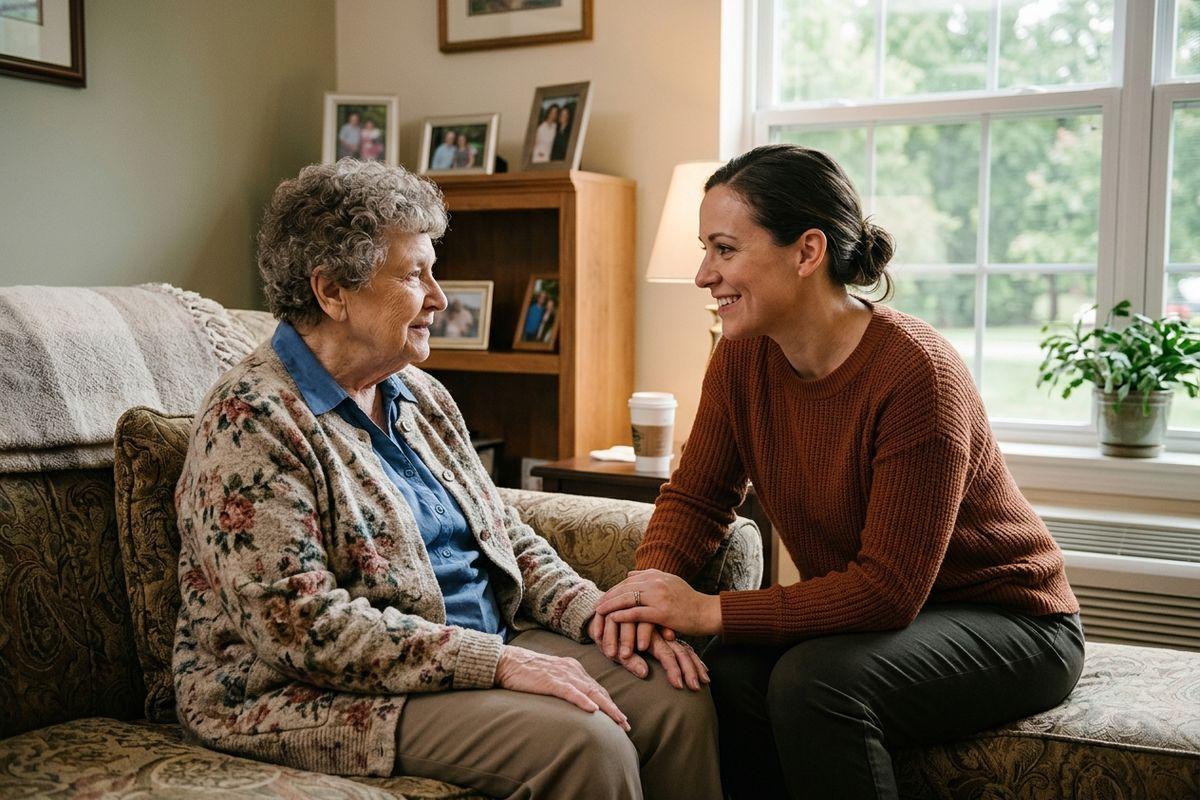
A senior and their family member sit together, smiling as they enjoy a visit in a senior living community.
How Can You Support Your Loved One?
Small Steps That Make a Difference
Supporting someone through depression doesn’t require grand gestures. Simple, consistent presence goes a long way. Gently encouraging your loved one to speak with a healthcare provider is a meaningful first step.
You might try joining them for a short walk or an activity they used to enjoy, even if their enthusiasm isn’t what it once was. Staying active in retirement has a genuinely positive effect on mood and overall well-being.
What Senior Living Can Offer
A warm senior living community can create a meaningful support system and a sense of belonging for older adults who feel isolated or disconnected.
Daily social activities, shared meals, and friendly neighbors create a natural rhythm of connection that’s hard to find when living alone. Compassionate staff are available around the clock to offer support and companionship whenever it’s needed.
Take a look at the weekly activities and events that help residents stay engaged and connected every day.
For families exploring assisted living or memory care, these communities design support to meet residents where they are, with care that adapts to their needs.
Respite care is also a helpful option for short-term stays, providing a change of scenery and a supportive environment.
Moving Forward With Hope and the Right Support
Depression responds well to connection, routine, and compassionate care, and senior living communities are built around all 3 of those things.
With Bentley Assisted Living at Branchville, residents can enjoy engaging activities, a warm community atmosphere, and attentive staff who truly get to know each person by name.
When you’re wondering whether senior living could help your loved one thrive, a tour can show your family exactly what’s possible. Reach out today and take that first step toward a brighter chapter together.