


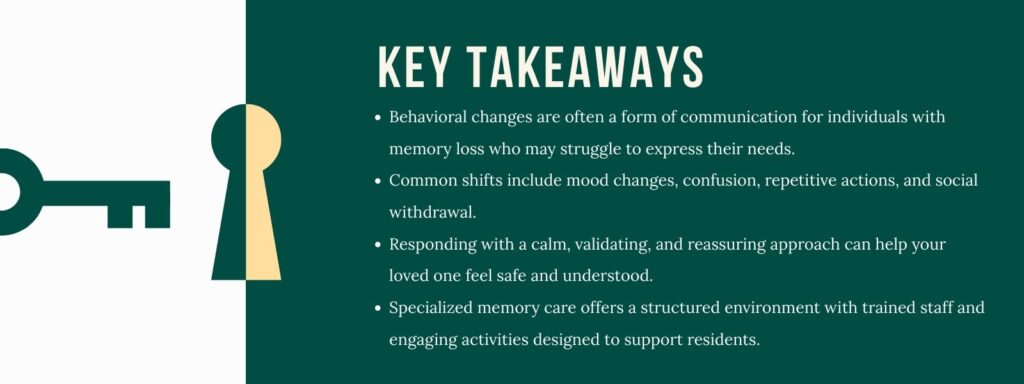
Key Takeaways
- Behavioral changes are often a form of communication for individuals with memory loss who may struggle to express their needs.
- Common shifts include mood changes, confusion, repetitive actions, and social withdrawal.
- Responding with a calm, validating, and reassuring approach can help your loved one feel safe and understood.
- Specialized memory care offers a structured environment with trained staff and engaging activities designed to support residents.
When you care for a loved one with memory loss, you may notice changes in their behavior that can be confusing or concerning. It can be difficult to know how to respond when someone you love acts in a way that feels unfamiliar, and many families find that compassionate support from an assisted living community makes all the difference. You might wonder what these changes mean and what you can do to help.
The good news is that these shifts are often a way for your loved one to communicate a need or feeling when words are hard to find. Understanding the reasons behind these behaviors is the first step toward responding with compassion and finding supportive solutions for you both.
Why Behaviors Change With Memory Loss
When you care for a loved one experiencing memory loss, you may see shifts in their behavior. These changes are typically a response to what’s happening inside and around them. They are not intentional but rather a way to communicate an unmet need or a feeling of discomfort.
- Communication challenges: Frustration can build when it’s difficult to find the right words or understand what others are saying.
- A reaction to the environment: A new place, loud noises, or too much activity can feel overwhelming and lead to anxiousness.
- Physical discomfort: Your loved one may not be able to tell you if they are in pain, tired, hungry, or thirsty.
Common Behavioral Shifts You May See
Every person’s journey with memory loss is unique, but some behavioral changes are more common than others. Recognizing these shifts as signals from your loved one can help you respond with kindness and patience. This new perspective helps you see the person, not just the behavior.
- Changes in mood or agitation: You may notice sudden shifts from calm to upset without a clear reason.
- Confusion about time or place: Your family member might talk about the past as if it’s the present or not recognize familiar people and places.
Other Changes to Notice
You may also see your loved one repeat actions or pull away from social situations. These behaviors are often a coping mechanism or a sign that they feel overwhelmed.
- Repetitive questions or actions: Repeating a word, question, or activity can be a source of comfort and security for them.
- Withdrawal from social activities: They may pull back from hobbies or gatherings they once enjoyed.
Supportive Ways to Respond and Connect
How you react can make a big difference in your loved one’s day. A calm and reassuring approach helps them feel safe and understood and can also aid in preventing caregiver fatigue. Your goal is to create a connection, not to correct them. This focus on emotional support—both for your loved one and for yourself—can turn a challenging moment into a positive one. Taking care of your own needs is also key to providing support, so it’s helpful to understand the signs of caregiver stress.
- Create a calm and familiar environment: Try to reduce clutter and loud noises. Play their favorite music softly or have familiar photos and objects nearby.
- Use simple and clear communication: Speak slowly, use short sentences, and make eye contact. A gentle touch on the hand can also be very reassuring.
- Validate their feelings: Instead of correcting something that is inaccurate, acknowledge the emotion behind their words. You can say, “It sounds like you feel worried.”
- Redirect with a positive activity: If they seem agitated, gently guide them to an activity they enjoy, like folding towels, looking at a photo album, or taking a short walk together.
How Specialized Memory Care Supports Your Loved One
Sometimes, the right support comes from a community designed for the specific needs of individuals with memory loss. A dedicated memory care program within a senior living community can provide a structured and supportive lifestyle that helps your loved one thrive.
- A safe and structured setting: A secure environment with clear, predictable routines helps reduce confusion and anxiety.
- Purposeful activities: Daily programs are thoughtfully designed to engage residents and support their cognitive health in a positive and enjoyable way.
- Compassionate and trained staff: A team available 24/7 can anticipate needs and respond to behavioral changes with skill and kindness.
- Community and social connection: Living with peers provides meaningful opportunities for friendship and reduces feelings of isolation. This lifestyle complements other options like assisted living and short-term respite care.
Find a Path Forward with Support and Community
Navigating behavioral changes related to memory loss can be challenging, but the right environment can make a meaningful difference. With consistent routines, familiar surroundings, and compassionate care, your loved one can continue to experience a sense of purpose, comfort, and connection. A supportive community helps you focus on shared moments of joy while knowing help is always close at hand.
At Bentley Assisted Living in Branchville, NJ, residents are welcomed into a calm, caring setting designed to promote dignity, reassurance, and daily engagement. The dedicated team works closely with families to create a personalized approach to memory care, offering both guidance and peace of mind.
If you are exploring next steps, scheduling a tour is the best way to see how this warm community can support your loved one’s journey.